

-
Stone Fabrication Tools
-
Board



-
Reverse Incremental Cutting Finger Tips for Quartzite


- Rapido Finger Bits
- Dura Finger Bits
- Lunga Finger Bits
- Reverse Finger Bits
- Finger Bits for Dekton
- Finger Bits for Quartzite
- Incremental Cutting Finger Tips for Granite
- Incremental Cutting Finger Tips for Dekton
- Incremental Cutting Finger Tips for Quartzite
- Tool Holders for Finger Tips
- Reverse Incremental Cutting Finger Tips for Granite
- Reverse Incremental Cutting Finger Tips for Engineered Stone
- Reverse Incremental Cutting Finger Tips for Dekton
- Reverse Incremental Cutting Finger Tips for Quartzite
Reverse Incremental Cutting Finger Tips for Quartzite
Wet / Reverse M12 thread / For quartzite and hard granite
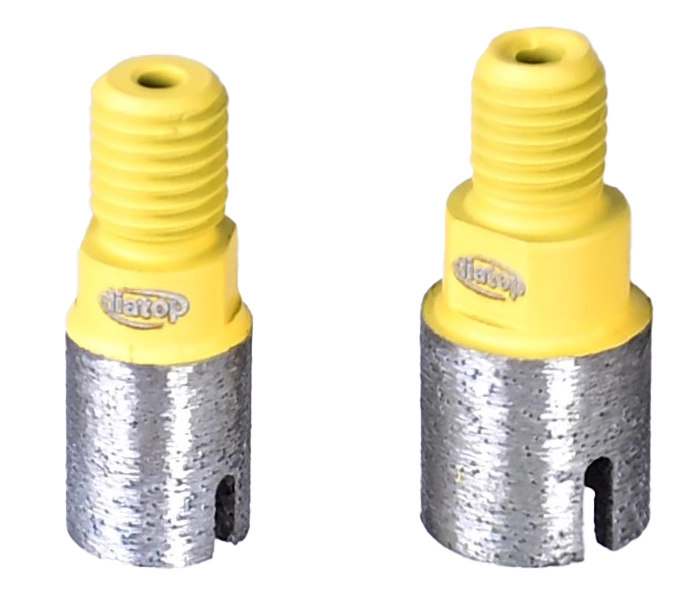
Professional Reverse Incremental Cutting Finger Tips for Quartzite
Quartzite and hard granite may require reverse-thread incremental tooling for controlled wet cutting during fabrication.
DIATOP Reverse Incremental Cutting Finger Tips for Quartzite are designed for wet cutting of quartzite and hard granite.
The tools use a reverse-direction M12 thread and are available in 16 mm and 20 mm diameters.
Both listed sizes use a 20 mm segment length.
Type of Equipment: RA (Radial Arm Polisher)
Key Features
-
Reverse direction thread.
-
Suitable for quartzite.
-
Suitable for hard granite.
-
Reverse M12 thread.
-
Wet cutting.
-
20 mm segment length.
-
Available in 16 mm and 20 mm diameters.
Available Sizes
Item – Diameter inch / Diameter mm / Segment Length mm
-
RIFQ1620 – 5/8 inch / 16 mm / 20 mm
-
RIFQ2020 – 3/4 inch / 20 mm / 20 mm
* Reverse M12 thread
Technical Notes
-
Tool Type: Reverse incremental cutting finger tip
-
Wet cutting
-
Thread: Reverse M12
-
Diameter options: 16 mm, 20 mm
-
Segment Length: 20 mm
-
Suitable materials: Quartzite, hard granite
Typical Applications
quartzite incremental cutting, hard granite incremental cutting, reverse quartzite cutting, quartzite countertop fabrication, granite countertop fabrication, radial arm stone cutting, wet stone cutting, stone fabrication
Q1. What reverse incremental finger tip is recommended for quartzite?
A. DIATOP Reverse Incremental Cutting Finger Tips for Quartzite are designed for wet cutting of quartzite and hard granite and use a reverse M12 thread.
Q2. What sizes are available for the Reverse Incremental Cutting Finger Tip for Quartzite?
A. The catalog lists 16 mm and 20 mm diameter options, both with a 20 mm segment length.
Q3. What thread is used on the Reverse Incremental Cutting Finger Tip for Quartzite?
A. The catalog specifies a reverse M12 thread.
For reverse incremental finger tip selection guidelines, thread compatibility, wet operating conditions, and troubleshooting guidance, please visit the DIATOP Tech Notes section.
